
Introduction: Biocontrol agent populations can be assessed through site evaluations which are a quick way to inform management decisions. Evaluating biocontrol sites will help answer the most common questions: Are biocontrol agents established? Is the biocontrol agent collectible? Are my release practices working?
Are Biocontrol Agents Established? We consider biocontrol agents to be established if any number of the biocontrol agent is present five or more years following release. This indicates they have produced new generations and are capable of surviving at a site.
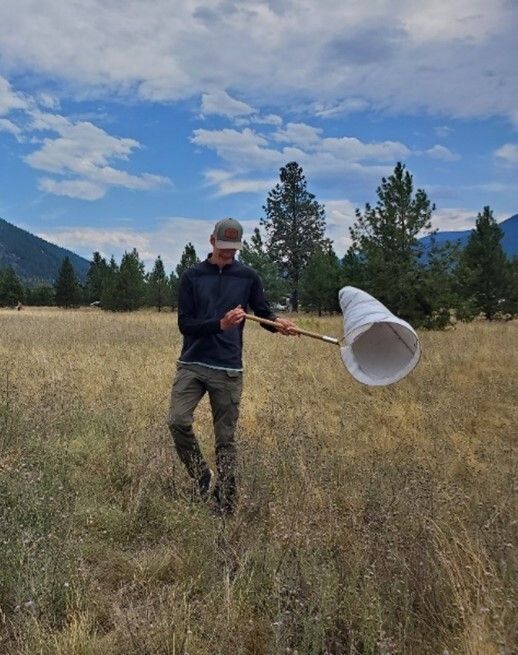
Can Biocontrol Agents be Collected from this Site? Site evaluations use standardized insect counts and site characteristics to determine if past releases have developed into sites you can collect from. This is easily confirmed when insect counts meet a predetermined threshold, which is specific to the biocontrol agent being evaluated (reach out to MTBCP for more information). Once a biocontrol agent population has reached the threshold, collection efforts have little to no negative impact on that population. Local, easy-to-access collection sites save land managers time and money and increase the likelihood of establishment at other sites because the insects are adapted to similar environmental conditions.
Are My Release Practices Working? Biocontrol agent establishment and success depend on unique site conditions. At some sites with less-than-ideal conditions, insects may be present but in low numbers (well below the threshold) after multiple releases have been made. Tailoring your release practices can help populations increase more rapidly, making your efforts more efficient. Most biocontrol agents only live for one season; therefore, it is essential that they mate and lay eggs to ensure they survive to the following year. This is why releasing all insects in one spot, not scattering, is ideal. Additionally, increasing the number of releases at a site can boost the biocontrol agent population. For example, if one release is the minimum suggested for a 1-5 acre infestation, releasing up to 10 times the minimum could increase the likelihood of developing a collectible population.
Do You Have Biocontrol Sites That Should Be Evaluated? The Montana Biocontrol Project can assist land managers by conducting site evaluations, hosting evaluation field trainings, and distributing monitoring supplies. In general, we evaluate sites where 1) biocontrol releases were made five or more years ago, 2) the site is accessible with known coordinates, and 3) the biocontrol agent was released on yellow toadflax, Dalmatian toadflax, leafy spurge, or spotted knapweed. Site evaluations provide the answers to the questions listed above, but if knowing how biocontrol has impacted the target weed, and if beneficial plants or other weed populations have changed, regular monitoring should begin before biocontrol agents are first released. Contact the Montana Biocontrol Project at jleblow@missoulacounty.us to learn more.


