
Introduction
Basic guidelines for biocontrol site evaluations were introduced in the 2026 February Weed Post. Here we provide details about leafy spurge (Euphorbia virgata) site evaluations.
Which Biocontrol Agents Are Evaluated?
Flea beetles (Aphthona spp.) and stem-borer beetles (Oberea erythrocephala) are the two leafy spurge biocontrol agents evaluated in Montana. There are multiple species of flea beetles, but the two most common can be differentiated by color (A. nigriscutis is brown, A. lacertosa is black). Evaluations should only count the predominant flea beetle species at a site.
When Should Leafy Spurge Sites Be Evaluated?
In Montana, leafy spurge biocontrol agents are typically evaluated in July when populations are at their peak. Weather and timing can impact evaluation results. To ensure the most accurate results, evaluations should only occur when 1) temperature is above 80°F, 2) it is not raining, 3) wind speed is no greater than the average for the area, and 4) the previous day didn’t receive heavy rain and wasn’t unseasonably cold.
How Are Leafy Spurge Sites Evaluated?
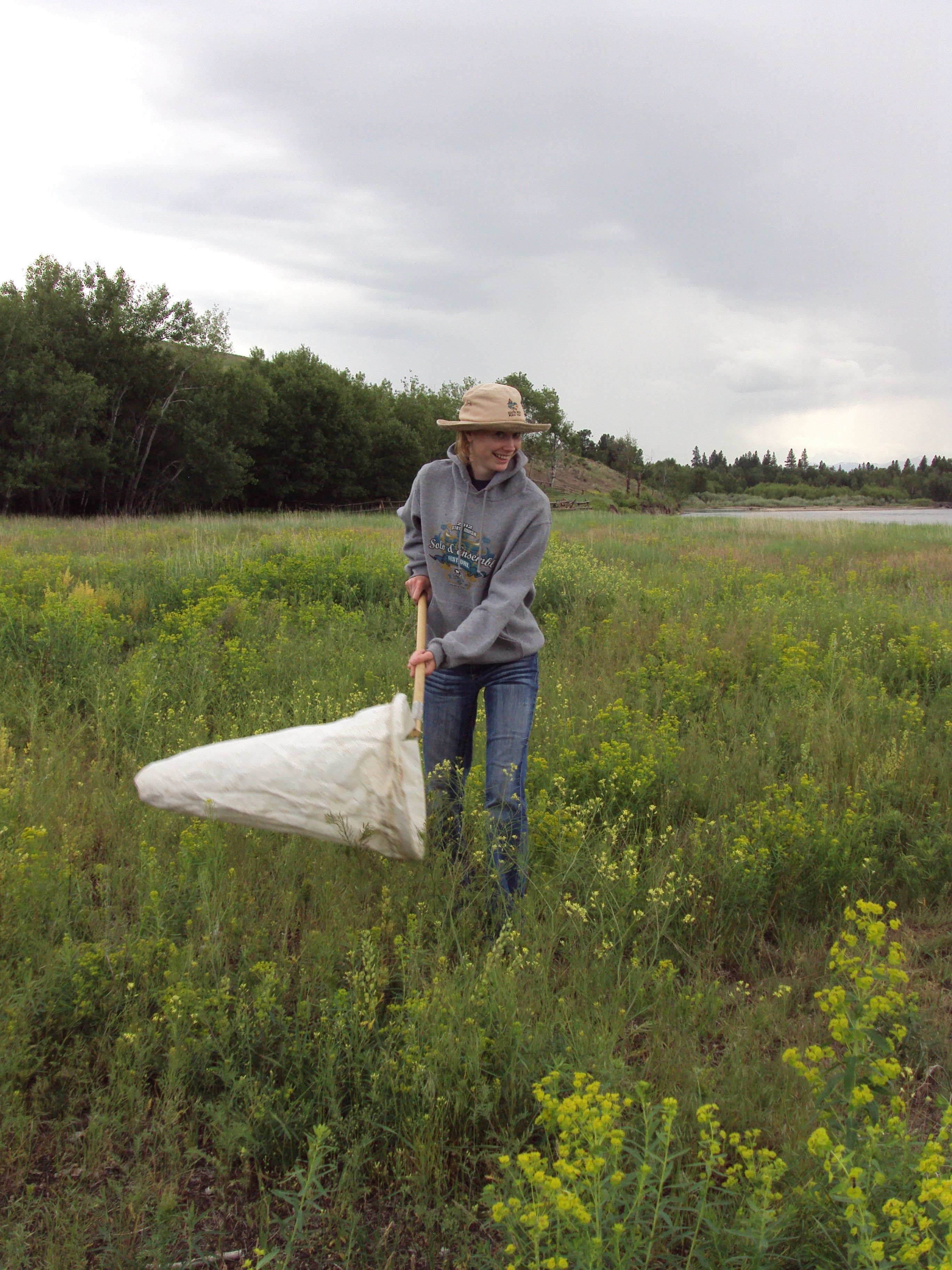
Leafy spurge flea and stem-borer beetle populations are evaluated simultaneously. Conduct 10 sweeps with a canvas net and count the number of each species of insect collected in the net. Do this six times and calculate the average for each species. One sweep is defined as an 180° arc in one direction. The Site Evaluation Form guides land managers through this process.
Are Leafy Spurge Biocontrol Agents Established?
We consider leafy spurge agents to be established if any number of flea or stem-borer beetles are found during the site evaluation five or more years after initial release. This indicates they have produced new generations and can survive at the site.
Can Leafy Spurge Biocontrol Agents Be Collected from this Site?
If the number of beetles observed during six sets of 10 sweeps averages at least 100 flea beetles and/or 5 borer beetles, and there is at least one acre of moderately dense leafy spurge at the site, leafy spurge biocontrol agents can be collected.
Are Release Practices Working?
Leafy spurge biocontrol agent establishment and success depend on unique site conditions. Sites with annual flooding or large ant populations may be less likely to establish. If releases have been made at a site and beetle counts do not meet the respective collection thresholds, adjusting your release practices may help. Leafy spurge beetles should be released in one spot (not scattered) for three consecutive years. One release of flea beetles (1000+ insects/release) and/or stem-borer beetles (50 insects/release) is the suggested minimum release rate for a 1–5-acre infestation. Releasing 10 times or more of the suggested rate could increase the likelihood of developing a collectible population.
Do You Have Leafy Spurge Biocontrol Sites That Should Be Evaluated?
MTBCP can assist land managers by conducting site evaluations, hosting evaluation field trainings, and distributing monitoring supplies. Contact jleblow@missoulacounty.us to learn more.


