Garlic Mustard
Garlic Mustard
Alliaria petiolata
Identification
Roots: Long taproot that releases chemicals into the soil, suppressing the growth of native plants and tree seedlings.
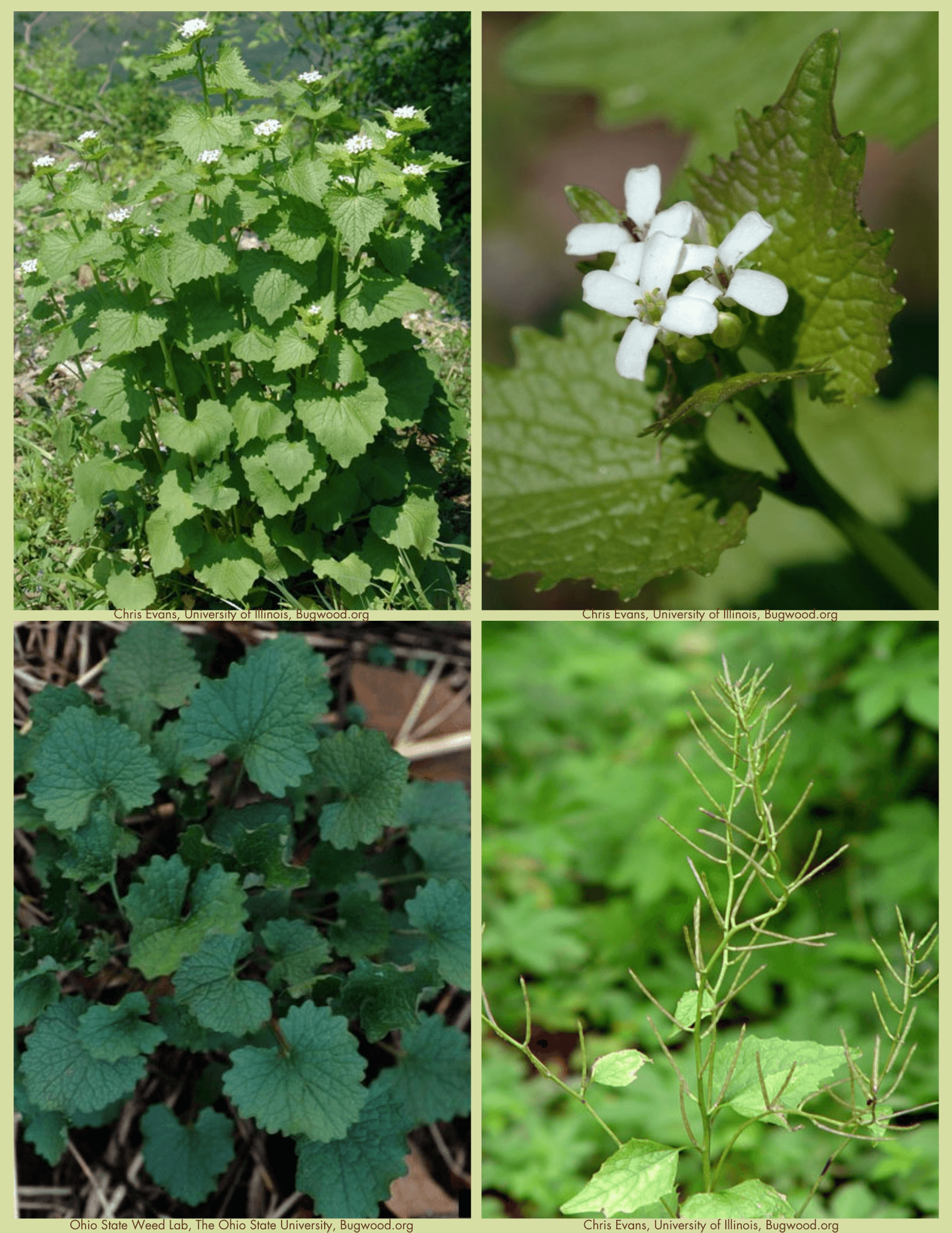
Leaves: First-year plants form a basal rosette of heart-shaped, serrated leaves close to the ground. Second-year plants produce triangular, serrated leaves along the flowering stem. Leaves emit a distinct garlic odor when crushed.
Stems: Upright flowering stems grow 2–4 feet tall during the second year.
Flowers: Blooms from spring through early summer. Small, white, four-petaled flowers grow in clusters at stem tips and where leaves meet the stem.
Seeds/Fruits: Produces long, slender seed pods that turn grayish-brown as they mature. Each pod contains numerous small black seeds. Seed production is Garlic Mustard's primary means of spread, making early treatment before seed set critical.
Life Cycle
Biennial
Habitat
Shade-tolerant forb commonly found in forests, woodlands, riparian areas, and other shaded habitats.
Control
For small infestations, hand pulling or mowing in early spring before plants flower can be effective. Remove the entire root whenever possible. Place pulled plants in sealed bags and leave them in the sun for several hours to ensure any developing seeds are no longer viable. Dispose of plants in the trash- do not compost. Clean footwear, clothing, and tools after working in infested areas to prevent spreading seeds. Repeated treatment over several years is often necessary to exhaust the seed bank.
For larger infestations, herbicide treatments applied in early spring or late fall can provide effective control while minimizing impacts to many native species. Early detection and rapid response are key to preventing Garlic Mustard from establishing dense populations.
The Nature Conservancy- Garlic Mustard: Invasive, Destructive, Edible


