
I have a very specific, unique weed problem with an elegant, unique solution that I believe many of you will relate to and possibly benefit from.
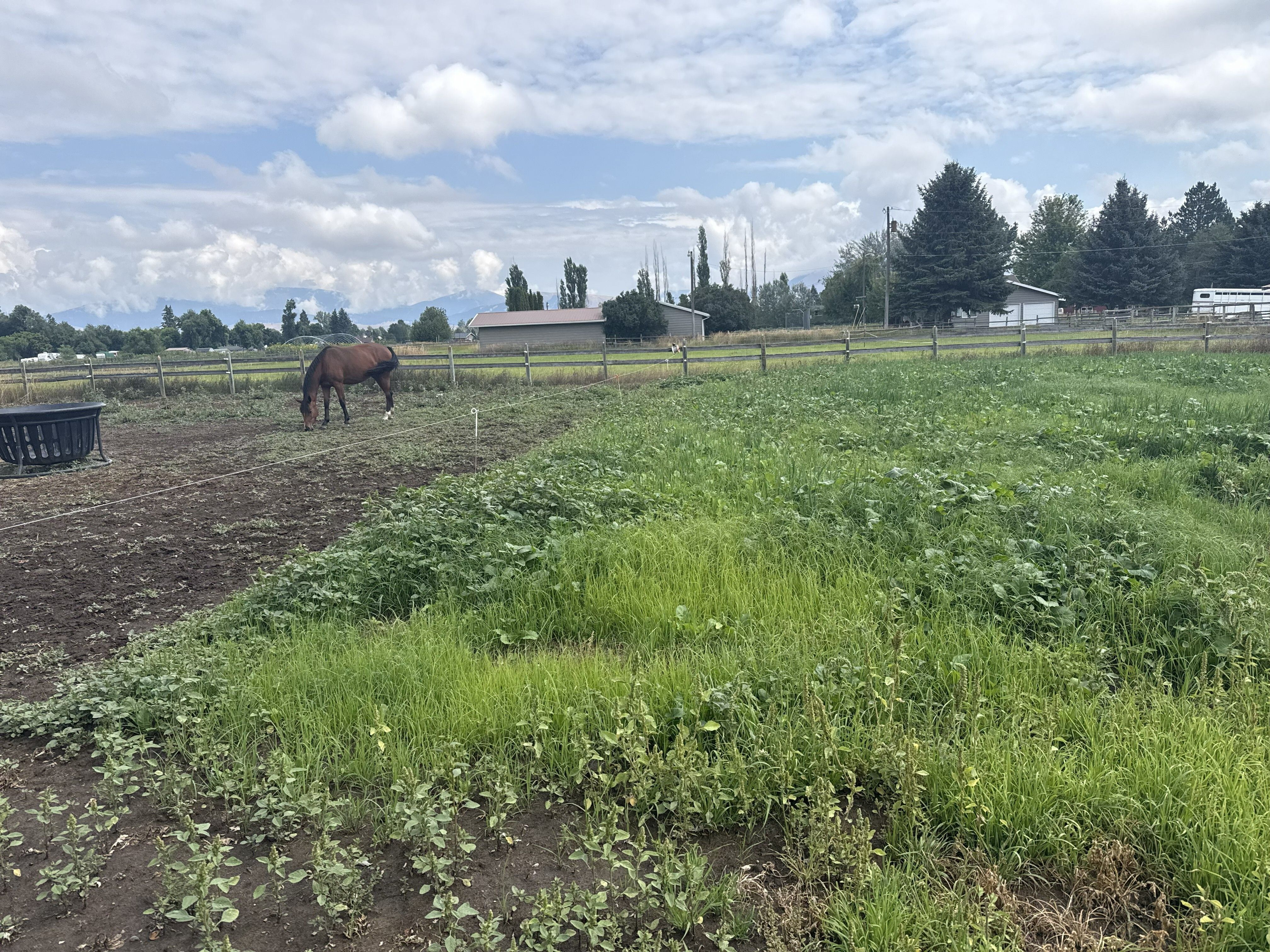
The problem is located in what I call the Eastside pasture, but it’s no longer a pasture. At 0.6 acres, it went quickly from solid grass to dirt in five years, primarily because I use it as my winter sacrifice area. This is where I turn horses out together when I’m protecting my “Garden” pasture- muddy springs, wet falls, and mild winters when the ground is not frozen. It complements my primary sacrifice area of paneled paddocks closer to the barn.
What happens between May and September is that I use this second sacrifice area very little, because the horses are now out in the “Garden” pasture or in sacrifice area #1 (the paddocks). So, the pigweed sprouts up and completely takes over. There are no horse hooves or teeth to keep this Eastside pasture/sacrifice area bare dirt during the growing season. Therefore, this 0.6-acre area has become the most troublesome weed issue on the property.
I’ve tried many things over the last two years to get ahead of the pigweed. I started by spraying the heck out of it with glyphosate, but that must be done multiple times a year and feels like a Sisyphean effort. I’ve cut the 0.6 acres into smaller pieces to restore about 1/3rd of it, but that’s been an utter failure (more of all the ways I’ve failed in a separate blog article). I’ve tried removing the top layer of dirt with the pigweed seed bank with no effect and tried tilling the pigweed with some effect (this cost over $200 to do). Mowing every month hasn’t slowed down the pigweed either. As you can see, my expensive and laborious efforts have been for naught. However, I believe that I have hit upon a less expensive and laborious effort that will be more productive- a summer cover crop.
What is a summer cover crop, you might ask? Well, it’s a crop (could be one or more species) that grows aggressively from seed through the heat of summer and dies all in one year. Farmers and ranchers use the summer cover crop technique in an infinite number of ways: to restore unproductive fields, to produce sellable or grazable goods between more profitable crops, or as weed control! It took a Missoula County resident calling about a potential cover crop to make me think, “Oh, this could be the solution for my weed mess!”
With the help of Scott Johnson at Westland Seed (Ronan, MT) we created a “Horse Pasture Cover Crop”. The seed mix includes fall and annual rye, oats, teff grass, forage peas, crimson clover, turnips, and daikon radish. The rye and oats sprout rapidly, creating a nice little blanket of green just days after planting. The forage peas and clover supply nitrogen to the soil and high-quality protein to the grazers. The turnips and radish were placed in the mix to help break up heavily compacted soils that often stymie horse pasture regeneration.
To experiment with this seed mix, the Missoula County Department of Ecology and Extension has planted the horse pasture cover crop in two places. The first place that you can see the cover crop in action is in the Rocky Mountain Gardens on the Fairgrounds campus. It’s being used in a fallow section of the garden. The second place is at my own property. I’ve planted it in a small, experimental section of the Eastside pasture and roped it off from the horses. It was planted in early July and will be ready to graze at the end of August. It’s currently 30 days from planting and already a foot tall! (Both trials were irrigated.) I’ve turned dirt and weeds into grazable pasture that will lower my overall hay bill for the year!
If you are a horse person, you are likely reading this and thinking “those crops sound scary”, but each of the cover crop species has been chosen for their safety, palatability, and nutrient quality for horses! I will be using this cover crop technique in future years to outcompete the pigweed. After several years of timely glyphosate applications, horse pasture cover crop and grazing, the pigweed seedbank will be quelled, and I’ll have far fewer weeds to battle in this area! I will have accomplished my goals of weed control, fewer herbicide applications, and lower hay costs.


