
Jointed Goatgrass
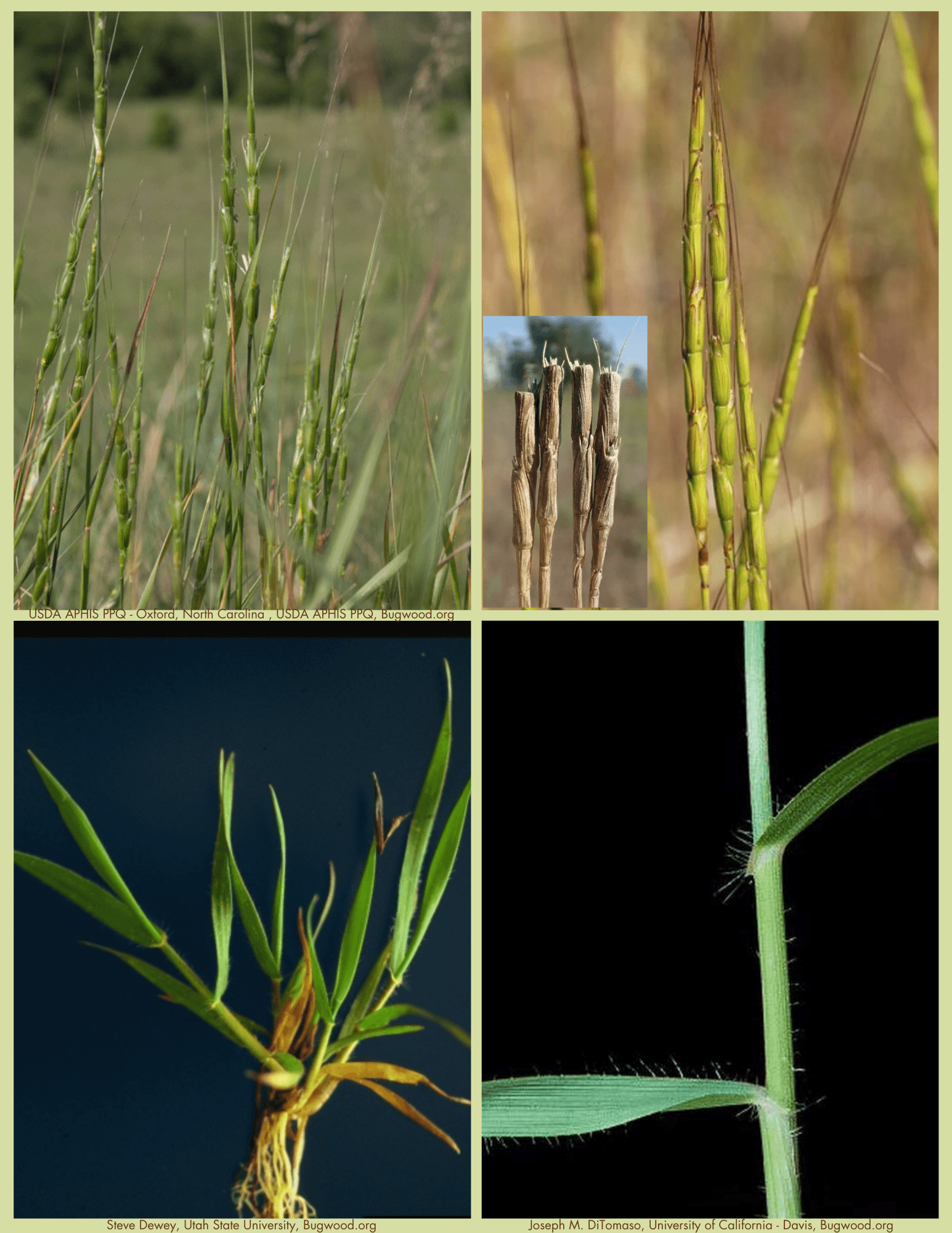
Jointed Goatgrass
Aegilops cylindrica
Identification
- Roots: Shallow-rooted and fibrous.
- Leaves: Flat, alternate leaf blades 2–5 mm wide with overlapping leaf sheaths. Resembles winter wheat in the seedling stage.
- Stems: Erect stems measuring 25–50 cm tall.
- Flowers: Blooms from May through June with 5–15 cm long spikes, containing 2–12 stacked and segmented spikelets, each 8–14 mm long. As they mature, the spikes turn from reddish to straw-colored.
- Fruit: Spikelets have prominent awns, with the longest awns found near the tip of the spike, 1.5-2 inches long. Mature seed heads break apart into individual segments.
Life Cycle
Winter annual
Habitat
Found in agricultural fields, dry grasslands, rangelands, and along frequently disturbed sites like roads and railways.
Control
Mechanical control methods, including mowing or weed trimming, are most effective before plants flower and produce seed. If timed incorrectly, mowing can disperse mature seeds and contribute to the spread of infestations. Several herbicides provide effective control at different growth stages, including glyphosate, imazapic, and aminocyclopyrachlor + chlorsulfuron.


