
June 16, 2026
If you have small fruits dropping off of fruit trees, especially apple trees, don’t worry this is just natural “June drop”, or the tree’s natural thinning process, which may have happened to an extreme if your blooms were killed by frost.
It’s time to spray for codling moth. Follow the label directions of the insecticide you are using for the spray intervals. It is best to rotate between two different insecticides so the bugs do not build up a resistance. Spinosad or neem are some of the least-toxic options. Malathion or permethrin are some of the hard pesticide options. It’s not yet time to spray for the Cherry fruit fly, the wormy cherry culprit but could happen soon.37305 Spinosad, pyrethrin, & malathion are some of the pesticides to use. You will spray every 7-10 days thru harvest.
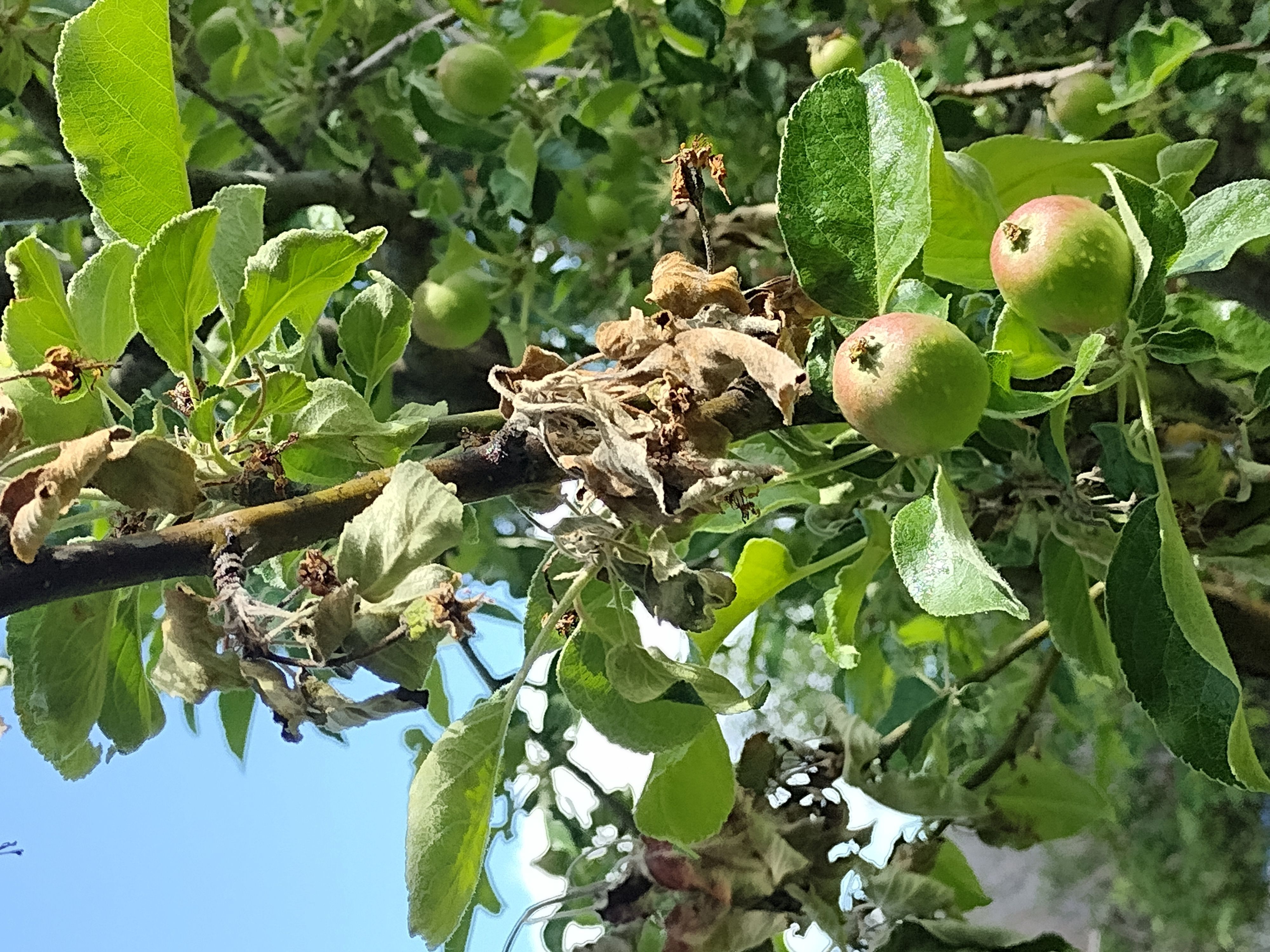
Fireblight strikes on new growth in trees that had fireblight last year or near by is still at high risk.
Prune out strikes and disinfect pruners between cuts as soon as you see them. Bacterial blight on apples & prunus species which has signs of shoot and blossom cluster dieback.
Apply the pheromone Verbenone to pine trees now to prevent Mountain Pine beetle attack, (available in Missoula at Rob Dillon Distributors). You can also spray pine and birch trees now for mountain pine beetles and borers. Spray trunks of healthy pine and birch trees as high as possible with a liquid carbaryl spray. On pine spray up to where trunk diameter is less than 4”. This treatment is not effective on trees that are already infested.
Be on the lookout for spruce budworm and tussock moth larva starting to be active and eating away at the new growth on spruce and douglas fir trees.
Poplar borer adults are starting to emerge from aspen trees and will soon be laying eggs in new aspen. This is the time to apply trunk insecticide sprays to healthy aspen to prevent poplar borer attack. Permethrin, carbaryl or cyfluthrin are the products to use, remembering to spray when bees and other beneficial insects are not around, such as early morning or late evening.
Aphids are still active. Check susceptible trees and shrubs, such as plum, cherry, caragana, and roses now. Treat aphids with insecticidal soap or neem plus insecticidal soap if more than 50% of your plant terminals branches are infested with aphids. Aphid populations should be decreasing soon. Eriophyid mites are responsible for yellow to brown blisters on apple, pear, and mountain ash leaves. It is too late to spray for blister and rust mites now.
Leafminers are inside lilac leaves now. If more than 25% of lilac leaves have tan blotches on them, you can treat with neem. Wilting spruce tree terminals (top branches) can mean White Pine Weevil larvae are feeding inside the tip branch. Remove and destroy wilted, browning spruce tips as soon as you see them to get rid of the weevil larvae.
Flea beetles are active now. Keep flea-beetle-eaten plants well watered and fertilize weekly with nitrogen to help them outgrow flea beetle attacks
We’re seeing a lot of disease problems now as a result of earlier disease infection periods, including fireblight, bacterial blight, peach leaf curl, apple scab, cedar-apple rust, aspen leafspot and blight, and powdery mildew. When temperatures are greater than 85 F and dry, disease infection halts. So, keep irrigation water off of leaves, branches and stems to avoid further disease infection.
Knapweed is just starting to bloom in warmer locations. Bloom time is the best time to mow knapweed to diminish seed dispersal.
Careful on watering in the garden now, we are starting to see some garlic rot. When we get an inch of rain we can take a couple days off from watering.


