
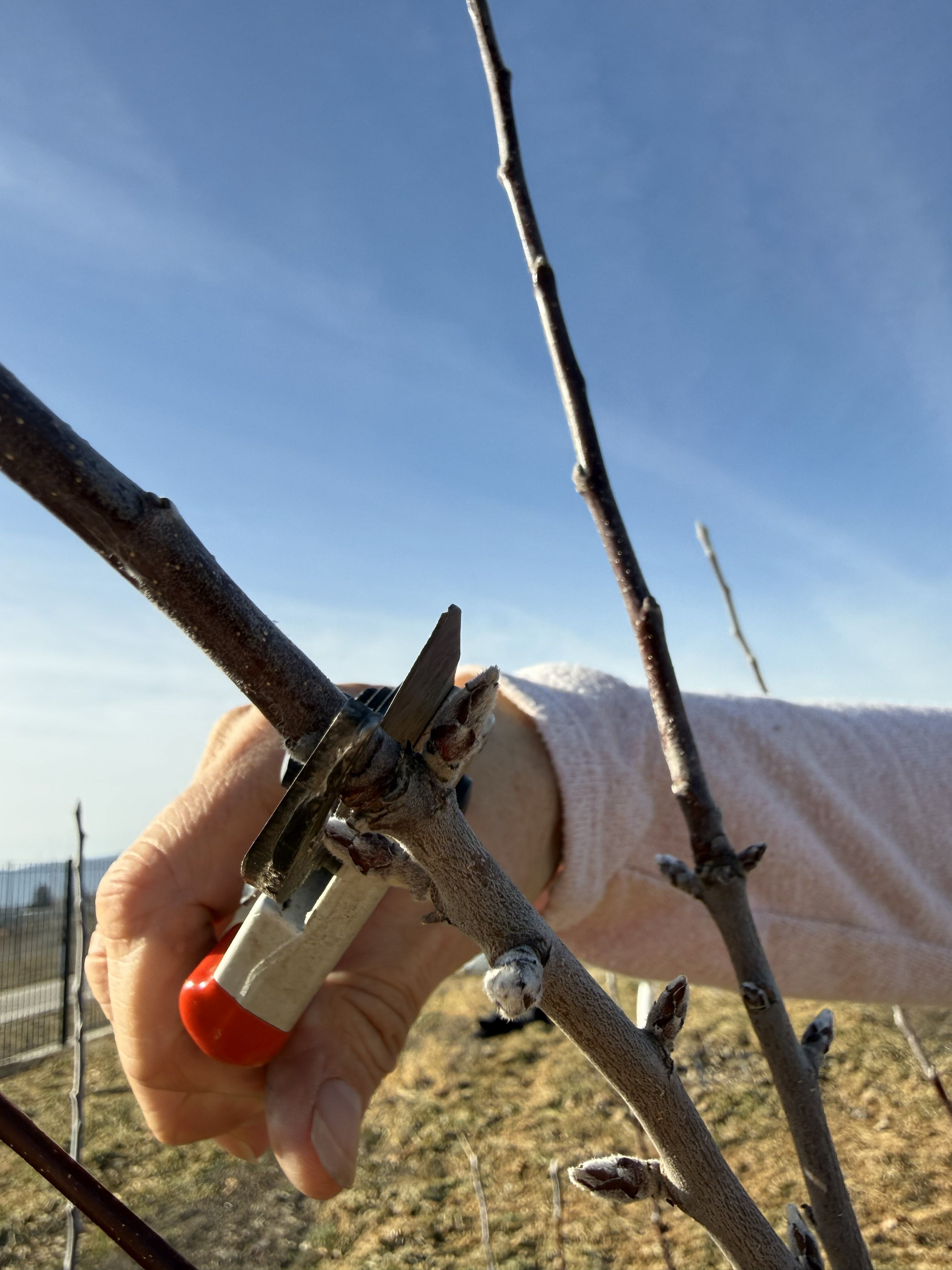
Warm days allow for pleasant outdoor activities, and trees are just coming out of winter dormancy, allowing for easy branch viewing. Plus, any pruning cuts will start to heal very rapidly as the tree mobilizes stored sugars for new leaf growth. Some trees naturally grow into the form you want, whereas many others will benefit from some help directing their branches to grow into the right spot that provides the best growth for you and the tree. Prune young trees (up to 10 years of age) lightly. Encourage lateral branching on the major limbs with summer tipping. Do not remove more than one-third of the living vegetation in a season.
The right tools make tree pruning a lot easier and more fun. A quality set of hand pruners, lopping shears, and a small pruning saw will typically cover most applications. Larger branch removal may require a larger hand saw or a small chainsaw. The best pruning cuts are those that heal quickly. Cuts should leave a smooth surface without jagged edges and be made close to the tissue that will remain alive because it transports water and sugar between roots and leaves. This will facilitate the growth of new bark over the wound. Branch removal should result in a cut that is either flush with the remaining branch or on the outside of the slight swelling where the branch attaches to the stem. Any kind of stob that is left attached to a branch or stem will typically die back to a main stem or branch, leaving a perpetual deadwood entry into the living portion of the tree that will never heal. Such dead stobs allow for the entry of fungi and insects into the living stem of the tree and also disrupt water and sap flow up and down the branch or stem, and can be considered similar to a scab on your arm that never heals. Past pruning cuts that left stobs or broken off branches should be pruned back to living tissue. Also, select a bud or branch facing outward or toward an open space. If the cut were made to an inward-turning bud, the new growth would eventually cross and rub other branches. This rubbing damages tissue and prevents air circulation and light penetration. This type of growth occurs frequently enough in nature without being encouraged by pruning!
The following are steps that comprise the major portion of pruning, leaving small detail work to your personal preference/imagination.
REMOVE ALL DEAD and DISEASED WOOD to help prevent rot and decay, and to eliminate entry points for boring insects.
REMOVE CROSSING/RUBBING BRANCHES as they will eventually damage tissue, causing rot and decay.
REMOVE BRANCHES GROWING STRAIGHT UP OR TURNING INWARD TOWARD THE TREE to allow air and sunlight to penetrate the tree canopy, producing healthier growth and fruit development.
REMOVE WEAK or POOR BRANCH CROTCHES at an angle of 45° to 90° to support heavy foliage and fruit production, and to minimize staking, guying and artificial supports.
ELEVATE LOWER BRANCHES to allow easy access for mowing and cultivating under and around the tree canopy.
After completing the five steps, stand back and look at the remaining material. If one branch or side of the plant is larger, or out of proportion, head back to a bud or lateral branch, turning in the desired direction to balance the canopy.
For more detailed information check out this publication
Thank you to Roger Joy & Peter Kolb for the technical information they provided.


