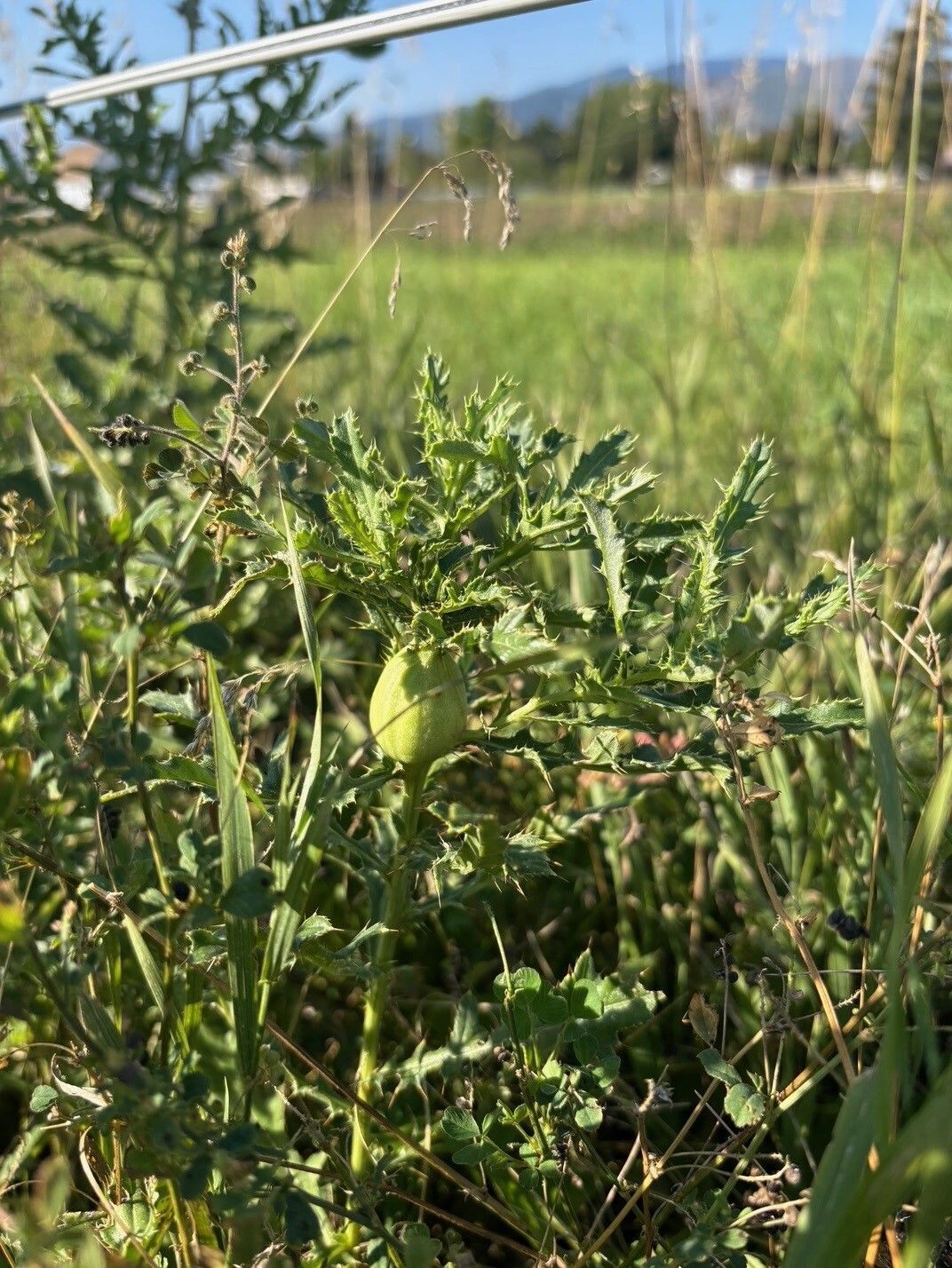
It’s been a year for weeds. The dry spring and consistently hot summer were a bust for the natives and a boom, or should we say bloom, for the invasives. The flowering forbs basked in the 90-degree days while the grasses withered and wore out.
It was a year for me too! I started as the Missoula County Agriculture, Equine, and Livestock Extension agent in January 2025 and was given a proper office for the first time in my adult career having spent the entirety of it on the road or in a home office as an equine and livestock nutritionist. I personally identify as a black thumb, historically uninterested in the world of plants. I’ve been a long-time student of the fauna in favor of the flora, so taking this job and working amongst the “green thumbs” has been an education.
This is what this blog is about. It’s a collection of personal stories, not only my constant battle with weeds on my own five acres in Target Range, but the stories of other land stewards in Missoula County. It’s about what I’m learning from the local experts; the weed and conservation districts, the Rocky Mountain Garden, biocontrol and pollinator experts, and the plant clinic. I’m in an office building surrounded by plant people, and I’m taking advantage of it to photosynthesize as much as I can. All of this is to say, I’m NOT the expert, but I’ll bring you what I’m learning from the experts in this blog series.
For “The Constant Battle” weed blog installation #1, I’m going to share with you 3 perspective shifts that I’ve acquired over the last year when it comes Western Montana land management large and small.
1. Here’s the most important thing that I’ve learned in the first year. The weeds are here to stay, and the “perfection” mindset is futile. You may think that you can eradicate weeds 100%, but they are pervasive. Secondary invasion is frustrating. Weeds don’t respect fence lines. Seeds may be living in the soil for years for just the right conditions. They are waiting for you to mess up, turn some ground over, kill the good stuff by accident, or overgraze your herd two years in a row. This fact translates in two ways for me. First, it means we can give ourselves some grace. The Missoula County Weed Education Coordinator, Steffany Rogge, is constantly reminding landowners that they are doing a better job than they think. She also recommends that you acknowledge your own weed tolerance level. It may be different from your neighbors, but if you are focusing on the toxic plants and those that make the noxious weed list, you’re ahead of the game.
2. It is ALL TOO EASY to screw up on small acreage. It feels like for every one year that you screw up, it’ll take five to ten years to recover. You can speed up recovery with expensive inputs, but even then there is no guarantee that the plants will behave as expected. I’m looking at the massive holes that the dogs have dug up in the yard, the ditch lines and tire tracks from construction equipment, and the sacrifice area that I now want to be pasture. Supporting these areas back to rich plant and soil health is going to take years. All landowners, including myself, hate hearing that there is no instant gratification when it comes to their dream property image. Therefore, consider the LONG game in all ways including prevention and recovery.
3. Good land management is a part time job even on the smallest of acreage. This is something that I want to acknowledge upfront. Ironically, my position as the Missoula County Ag and Livestock agent has greatly restricted the amount of time I have to manage weeds on my own property. *Note the need to give myself grace above! I’ve learned that the solution to a lack of time is better timing. I need to use the appropriate herbicide at the appropriate time for maximum efficacy. For most of us, that means getting some local help before purchasing an herbicide. To learn more about which herbicide to use and when, follow this link to the Missoula County Department of Ecology and Extension. https://missoulaeduplace.org/what-we-do/ecosystem-management/integrated-weed-management/weed-identification.html
In next month’s article, I’m going to discuss the number one mistake that landowners make when battling weeds. I’ll also give you some primary steps to prevent this mistake. If you’d like to receive these articles in your inbox, please be sure to subscribe to the “Light on the Land Extension” subscription list. Secondly, don’t hesitate to call with questions. I might not know the answer, but I will be able to direct you to someone who does!